
What You Will Learn
- What a rubber weight plate production process video can and cannot prove for a wholesale buyer.
- Which six checks turn factory footage into a usable sample-approval record.
- How to connect mold-stage visuals with the finished sample, weight tolerance, hole standard, and inspection plan.
- Why experienced buyers still ask for written proof even after they have seen real factory production footage.
Table of Contents
Quick answer: The rubber weight plate production process should help a buyer verify that the factory can make the right product family, but it should never replace the real sample standard. Before sample approval, ask the factory to connect visible process footage with the exact SKU, marked unit, weight-tolerance method, center-hole or insert standard, and the inspection evidence that will be repeated before shipment.
What Rubber Weight Plate Production Process Means
Rubber weight plate production process usually refers to the visible path from rubber stock or pre-cut material, to mold loading and press work, to a finished plate that can be checked for appearance, marking, and fit. For a B2B buyer, this keyword is not only informational. It sits in the middle of supplier screening, sample approval, and RFQ preparation.
From the factory side, buyers often ask for production videos when they are comparing two or three suppliers who all have similar catalog photos. That is reasonable. The mistake starts when the video becomes a comfort signal instead of a decision tool. A real process clip can show that the factory is handling related work. It does not automatically tell the buyer whether the exact plate they will receive uses the same hole standard, mark layout, packing route, or approval rule.
What Process Footage Proves and What It Does Not
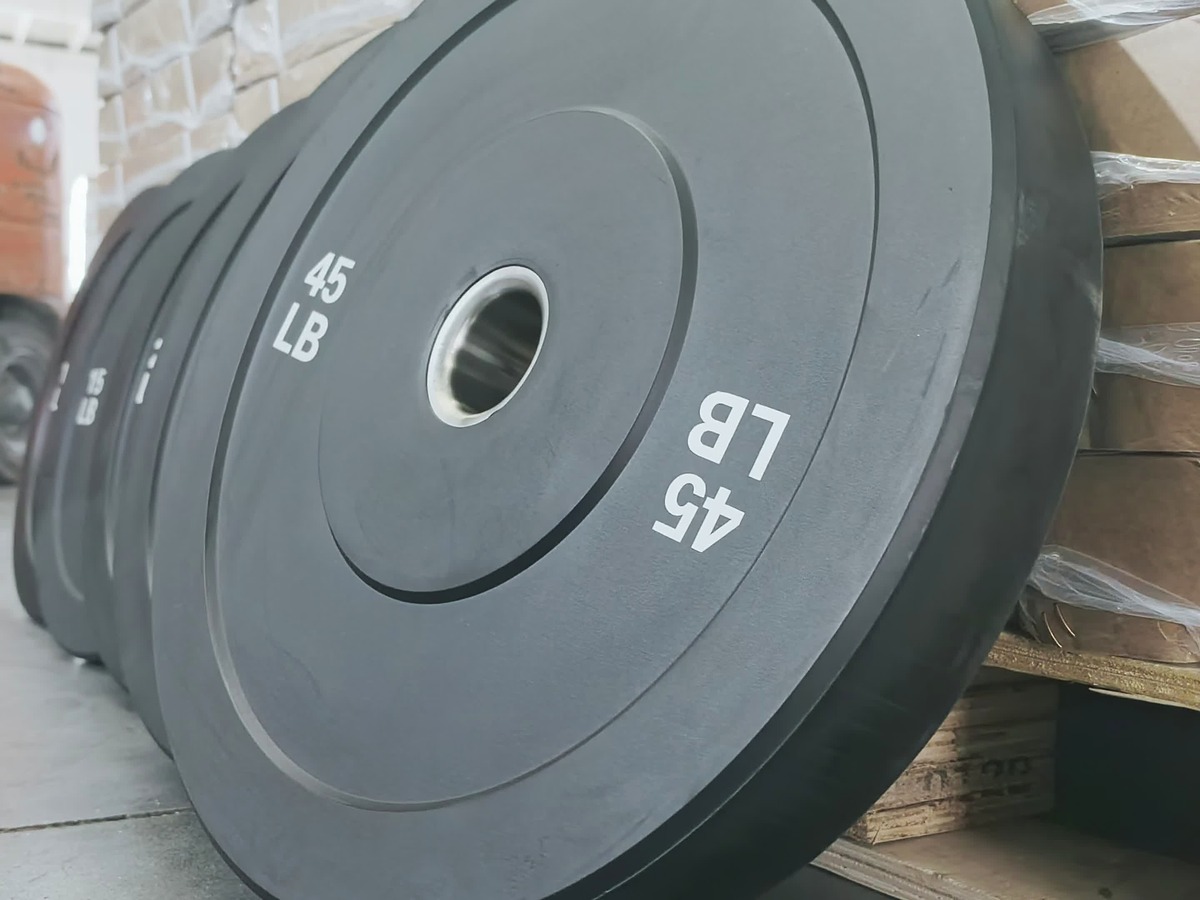
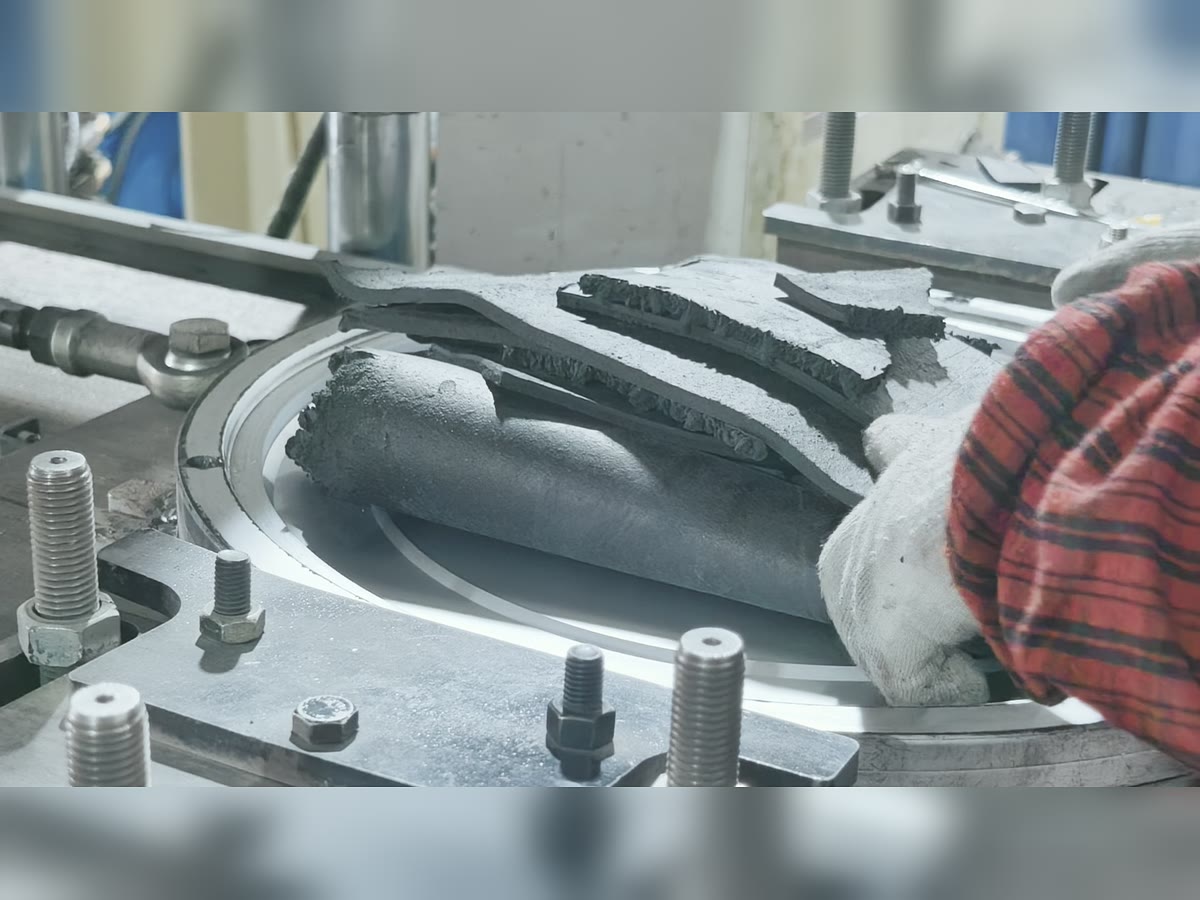
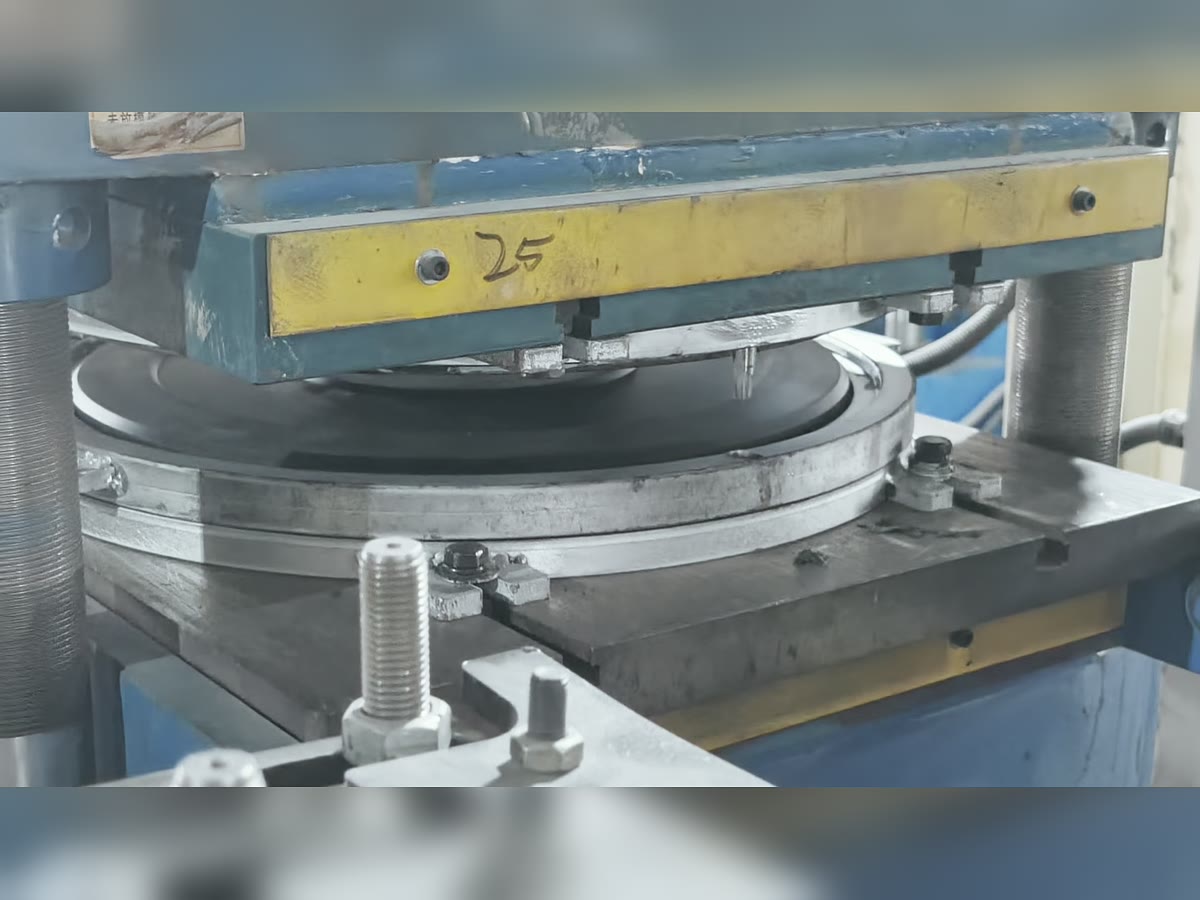
The three frames in this draft show a useful progression: raw black rubber stock near a plate mold, a mold under press, and finished rubber plates standing near packing material. That is real factory evidence. It is stronger than a stock image lifted from a catalog.
But buyers still need to hold the line on what the footage does not prove. It does not prove an exact formulation, a guaranteed odor level, a specific tolerance band, or a competition-grade claim. It does not prove that every weight in the order uses the same mark position or the same insert finish. If those details matter, the supplier needs to confirm them on the approved sample and in writing.
I have seen buyers relax too early after receiving convincing factory footage. Then the complaint shows up later in a much more ordinary form: the plate looks fine, but the receiving team still cannot tell whether the 45 lb face, the hole size, or the approved packaging note matches the actual order. That is why process proof should reduce ambiguity, not replace the paperwork that kills ambiguity.
The 6 Checks Before Sample Approval
1. Freeze the product family before discussing the process
Ask whether the footage represents rubber weight plates, rubber bumper plates, or another plate family. Buyers sometimes request “rubber plates” while comparing mixed sources that actually describe different product lines. Start from the rubber weight plates category or the specific rubber bumper plates product page, then match the visible process to the product family you will really quote.
2. Ask what the clip is meant to represent
A useful process clip should answer a narrow question: “this is the mold-stage view for the same plate family as your sample” or “this is how the finished plates appear before packing.” If the footage is used as a general factory presentation, say so. Buyers should not infer an exact sample approval from a general company video.
3. Connect the finished plate to the measured sample
The finished plate image is where many RFQs should slow down. The visible face, the mark, and the bore area need to connect to the measured sample. The follow-up links are how factories control weight plate tolerance and what weight tolerance means on a plate spec. The process footage is helpful only if the buyer can still write the weighing method and approval rule on the PI.
4. Confirm the hole standard and mark system on the actual sample
One of the quietest but most expensive mistakes is approving the process story and forgetting the fit story. The buyer should still confirm center-hole or insert expectations, unit system, face marking, and whether the visible finished sample is kg, lb, or both. If the order will be checked at origin and again at receiving, the incoming inspection checklist should use the same language.
5. Separate visible process proof from return-claim control
A process video does not replace claim prevention. If the buyer has odor concerns, paint-chip concerns on a mixed order, or a return-history issue, that needs its own control path. Yunlingyu’s rubber smell and return-claim guide is the right companion page here. Do not let “we saw the factory produce it” become a substitute for “we defined how this claim will be judged.”
6. Decide which evidence must be repeated before shipment
This is the practical close. Before bulk production, the buyer should ask which photos, measurements, and checks will be repeated for the actual order: sample face, mark position, weight check, hole or insert reference, carton marks, and maybe stuffing photos if the project is heavy or mixed. The factory QC and export packing proof page supports this step, but the RFQ still needs a specific checklist attached to the order.
What Buyers Still Need in Writing
| Evidence Type | What It Helps With | What Still Must Be Written |
|---|---|---|
| Factory video or photo | Shows a similar process exists | Which SKU, mold family, mark style, and sample date it represents |
| Finished sample plate | Shows appearance under one condition | Weight band, hole standard, mark position, and inspection photo baseline |
| Process explanation | Builds confidence in the factory route | A repeatable approval sheet for origin PSI and destination receiving |
| Packing or pallet photo | Shows the goods can be prepared for shipment | Carton count, marks, protection method, and loading evidence for the actual order |
How Yunlingyu Sports Can Support the Inquiry
For buyers screening a rubber weight plate manufacturer, the useful next step is simple: send the target product family, unit system, quantity, destination market, and the proof you actually need. That might be sample photos, weighing method, mark layout, or a pre-shipment check route. It is better to ask for a narrow proof set than a large video folder that nobody maps back to the order.
If the inquiry is already moving toward sampling or quotation, use the request a quote path with the product family, target weights, logo or mark request, packing expectation, and any inspection points the buyer wants repeated before shipment. That gives the factory a workable approval path instead of a loose “show me your production process” request.
FAQ
Can a factory video replace a sample approval sheet?
No. A video can show that the factory handles a related process, but it does not replace the approved SKU, measured sample, hole standard, weight marking, or pass/fail language on the PI and inspection plan.
What does a rubber weight plate production process video actually prove?
It can prove that a visible production or handling step happened for a similar product family. It does not prove the exact formula, odor level, tolerance, certification, or repeat-order consistency unless those details are tied to the approved SKU and written records.
What is the most common buyer mistake on this topic?
The usual mistake is treating process footage as a substitute for the real sample standard. Buyers feel reassured by a factory video, then skip the harder work of freezing the hole size, marked unit, weighing method, photo baseline, and pre-shipment check route.
What should a buyer ask a rubber weight plate manufacturer before placing a bulk order?
Ask for the exact product family, sample photos by angle, marked unit system, weighing method, center-hole or insert standard, packing route, and which photos or measurements will be repeated before shipment. That gives the process footage a practical job in the approval path.
Conclusion
The rubber weight plate production process matters because buyers want proof that the supplier is not selling from a catalog alone. But the smart move is to use that proof as a bridge, not as a shortcut. Connect the visible process to the exact SKU, sample photos, weight rule, hole standard, and pre-shipment checks. When that chain is clear, the footage helps the order. When it is vague, the footage only delays the real approval work.
Request a Rubber Weight Plate Sample-Approval Checklist
Send the product family, target weights, destination, mark or logo request, and the evidence you want repeated before shipment.

