
What You Will Learn
- How PE/cement fill differs from cast iron in shell, handle, and mass
- Failure modes that create kettlebell returns: crack, pull-out, rattle, coating
- Why a 16 kg kettlebell is a common commercial check SKU
- When cement-filled kettlebell sets are an honest home-gym wholesale buy
Table of Contents
What cement-filled and cast iron kettlebells are
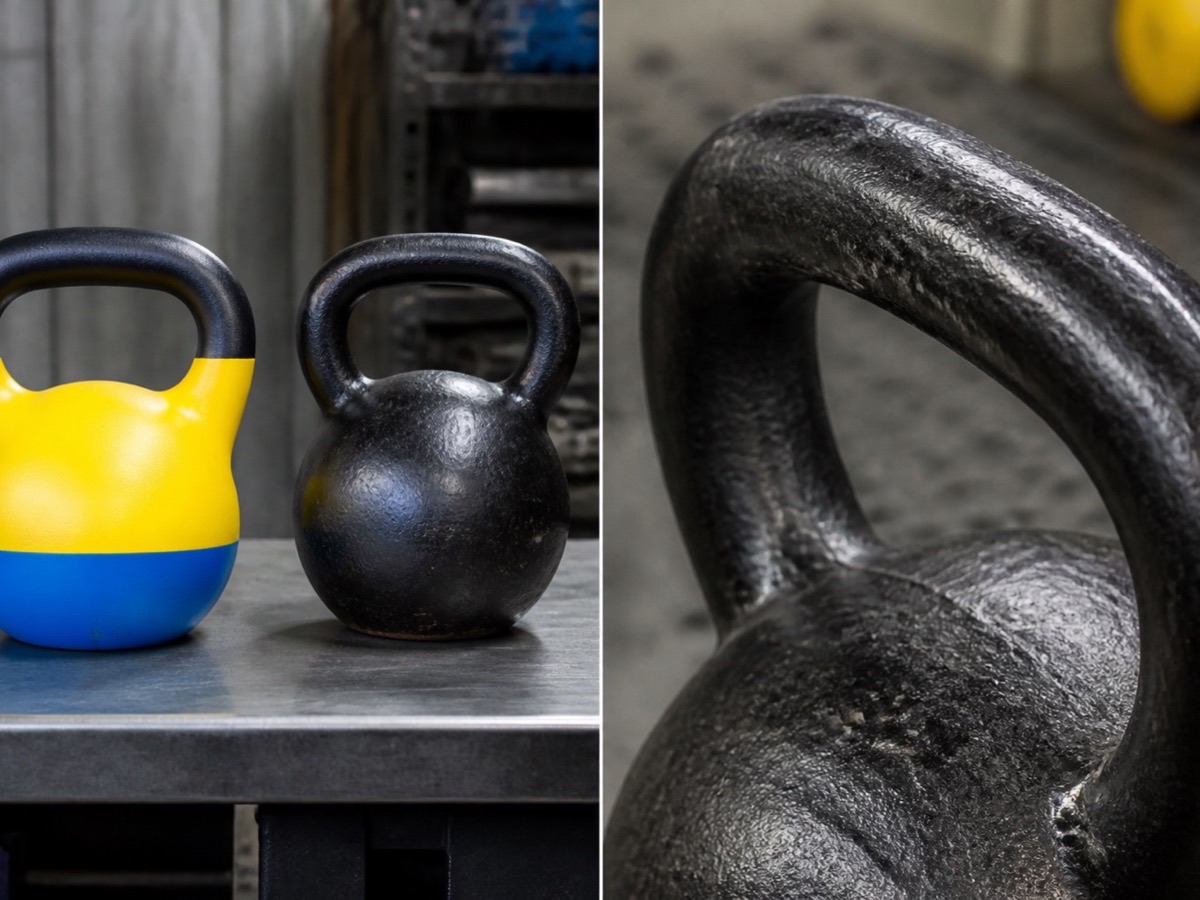
A cement-filled kettlebell is a hollow PE or similar plastic shell filled with cement (sometimes sand or mixed aggregate) so the finished piece hits a labeled mass. A cast iron kettlebell is iron poured into a mold; the handle is cast with the body or welded on. The two products are not the same SKU with a different paint color.
Yunlingyu makes both families for wholesale. Kettlebell sets that mix constructions on one PO without naming shell, fill, and handle type are how returns start. A 16kg kettlebell (16 kg) is a common commercial workhorse weight; it is also a useful check piece because it is heavy enough to show handle and fill problems that a 4 kg color SKU can hide.
How each construction fails in use and transit
Cement-filled PE fails at the shell and the handle interface. The shell can crack if dropped on a corner or crushed in a carton. The handle is often a through-bolt, insert, or molded grip; under swing loads the insert can loosen, the bolt can back out, or the shell can oval around the hole. If the fill was poured with voids, the bell rattles. If fill density varies lot to lot, labeled 16 kg pieces disagree on a scale even when the shell looks identical.
Cast iron fails at the handle weld or casting, at coating chips, and at flash that makes the base rock. A cracked weld is a safety claim, not a cosmetic one. Cast bells do not rattle from cement voids, but they can have porosity or a cold shut that only shows after a drop. Carton scuffs on painted iron look like “cheap paint”; the mechanism is film thickness plus packing, not the iron itself.
Failure modes to spec on the PO
| Mode | Cement-filled PE | Cast iron |
|---|---|---|
| Shell / body | Crack, puncture, seam split after drop or crush | Casting porosity, rock on a flat floor, broken horn |
| Handle | Insert pull-out, bolt spin, oval hole in the shell | Weld crack, handle diameter mismatch vs sample |
| Mass | Fill voids and density drift vs label | Flash, core shift, or unfinished grind vs label |
| Rattle | Unbonded fill or air pocket; shake test on a sample | Usually none; a rattle means a loose accessory, not fill |
| Finish | Color fade, PE scuff, logo pad wear | Paint or powder chip at the base and handle roots |
Write the construction name on every line of colorful cement kettlebell orders, including mixed kettlebell sets. Do not let a catalog photo of a cast bell stand in for a PE fill SKU. If you sell a 16 kg piece into a gym class, say whether drops onto rubber are in-scope. Cement fill is not a drop-rated competition bell.
How to inspect a 16 kg SKU before bulk
- Weigh the sample on a stated scale class. Record the reading next to the label. Do not average a set of mixed weights and call it one SKU.
- Shake and invert. A cement bell that rattles has a fill void; reject that construction for any channel that will treat rattle as a defect.
- Grip and load the handle. For PE, watch the insert. For cast, look at the weld toes or the cast fillet with a light.
- Photograph the base on a flat floor. Rocking is a casting or grind issue on iron; a deformed PE base is a mold or crush issue.
- Agree carton inner wrap so handles cannot pendulum and crack a neighbor shell in transit.
Use 16 kg as the audit weight when the set includes it. Lighter color SKUs can pass a visual check and still hide a weak insert that only shows under class-volume swings.
When cement is honest—and when it is not
Cement-filled color bells are an honest wholesale SKU for home gyms, light studio use, and price-sensitive kettlebell sets where buyers want many colors and will not drop from overhead onto concrete. They are not a substitute for cast or competition bells in a commercial floor that programs swings, cleans, and snatches all day. Do not print “cast iron” on a PE shell. Do not sell cement fill as competition-dimension unless the drawing matches that family.
FAQ
Why do cement kettlebells rattle?
The fill did not bond to the shell or was poured with an air pocket. Shake the sample. If rattle is a return reason in your channel, make a silent fill a written pass/fail, not a verbal hope.
Is a 16 kg cement bell OK for a commercial gym?
Only if the gym’s program matches the construction: limited dropping, users who will not treat the shell as a bumper. For all-day kettlebell classes, specify cast iron or a competition-style steel bell and inspect the handle as a safety item.
Can I mix cement and cast on one PO?
Yes if each line names construction, handle type, and packing. Mixed unmarked cartons are how a retailer receives the wrong family and opens a claim. Keep carton marks distinct.
What handle spec should I send?
For PE: insert or bolt type, whether the handle is through, and a wiggle test. For cast: weld or cast-in, handle diameter vs sample, and a visual crack check. Photos of the golden sample become the baseline.
Conclusion
Cement-filled and cast iron kettlebells fail in different places: shell and fill versus weld and casting. Spec those modes, use a 16 kg piece as a check SKU when it is in the set, and treat cement as an honest home-gym wholesale option—not a silent swap for iron. Yunlingyu quotes both families on contact-us.
Need cement vs cast kettlebell specs on one RFQ?
Send target channel (home gym vs class), the 16 kg quantity, and whether rattle is a defect. Yunlingyu will name construction and handle type on the quote.
About the Author
This guide is brought to you by Yunlingyu (Dingzhou Yunlingyu Sports Goods Co., Ltd.), a fitness equipment manufacturer specializing in dumbbells, weight plates, barbells, squat racks, Smith machines, benches, kettlebells, and related gym products for wholesale, OEM, and private-label buyers worldwide.

