
What You Will Learn
- How to set single-piece and pair error limits on wholesale dumbbells
- Why kg and lb markets need the mark and the weigh in the same unit
- Why 55 pound and 70 lb SKUs need their own sample checks
- What to write on the PI so receiving does not invent a new rule
Table of Contents
What a dumbbell weight-error limit is
A wholesale dumbbell weight-error limit is the allowed difference between the marked rating and the mass of each finished bell, plus any pair delta you care about, measured on a stated scale. It is a procurement rule, not a training cue. If it is missing, every warehouse will invent its own fail.
On export hex lines such as hex rubber dumbbells, rubber hides the iron. The gym still judges the pair by the mark on the end. Write the unit on the PI: kilogram or pound. Do not mark kg and weigh as lb without a rounding rule.
Where kg and lb orders go wrong
A 24 kg bell is not a 55 lb bell. A 32 kg bell is not a 70 lb bell. Stickering a kg SKU with a lb number after production creates a second rating that the scale will not match. US gyms that order 55 pound dumbbells and 70lb dumbbells should receive pound-marked tools, or a written conversion that receiving will not use for claims.
Heavy SKUs also hide process drift. A 10 lb sample inside a wide percent can still leave a 70 lb pair outside a gym’s comfort. Set the band per rating family, and require a pair check on the heaviest SKUs on the PO.
Limits that inspectors can actually use
| Field | Write on the PI | Why it matters |
|---|---|---|
| Marked unit | kg or lb, matching the end cap | Stops conversion fights at receiving |
| Single-piece band | Percent of marked or a gram/ounce band | Defines a fail on one bell |
| Pair delta | Max difference between left and right | Gyms feel uneven pairs even when both sit in a wide percent |
| Scale | Resolution finer than the band; dry weigh | A coarse scale cannot judge a tight band |
| Sample vs bulk | Same method on AQL pieces | Stops “sample scale” versus “warehouse scale” |
Percent bands grow in grams as the rating goes up. That is arithmetic, not a quality upgrade. If the gym cares about even pairs, the pair delta is the line that prevents returns, not a looser percent on each bell.
How to set and check the band
- List every rating on the PO with its mark. Separate kg rows from lb rows.
- Choose percent or a fixed band. Put the arithmetic on the PI in one sentence.
- Add a pair delta if the bells ship as pairs. Mark A/B and weigh both.
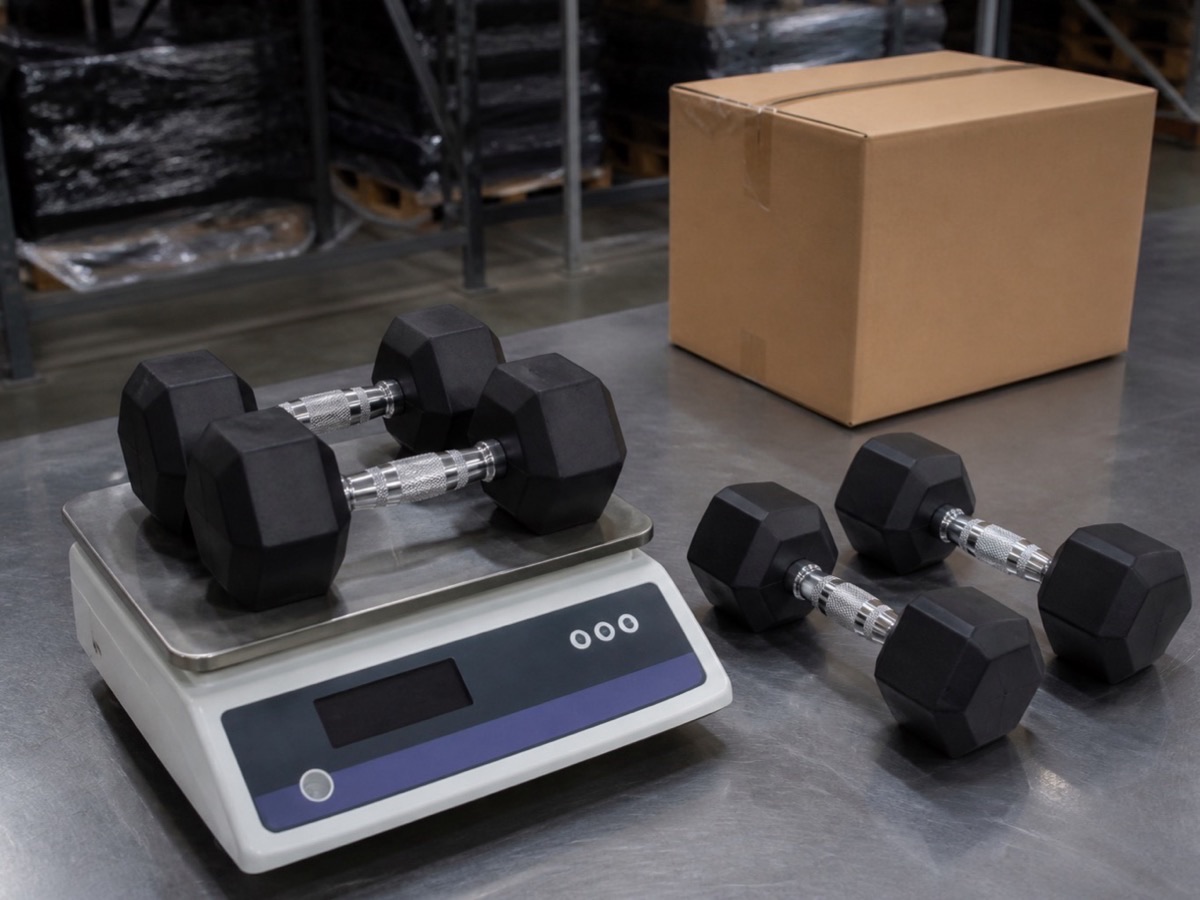
- Weigh the approved sample of 55 pound dumbbells on the same class of scale you will use in bulk. Repeat on 70lb dumbbells if that rating is on the PO.
- Photograph the mark and the display. Keep the photo with the AQL sheet.
- Reject a pair if either bell is outside the single-piece band or if the pair delta is exceeded.
Do not average two bells to “make the pair pass.” The gym lifts one in each hand.
Worked PO: US gym, 55 pound dumbbells and 70lb dumbbells as the top two ratings, plus a kg set for another warehouse. Two packing lists, two mark systems. Do not weigh the pound SKUs against a kg conversion on receiving day. If a rating exists in both units, they are different SKUs even when the iron looks the same.
What this limit is not
A mass band does not prove head-to-handle tightness, coating adhesion, or handle diameter. It does not convert a kg factory blank into a lb retail SKU. It is not a calibration certificate. If a retailer names a test method, attach that method; do not print a mark you cannot support.
FAQ
Can one percent cover the whole 5–50 set?
You can write one percent, but small plates will have a tiny gram window and heavy bells a large one. Many buyers use a gram band below a cutoff and percent above it. Write the cutoff.
We ordered kg and the gym wants lb labels.
That is a marking change. Re-order or accept that claims will use the original mark. Do not weigh against the new sticker.
Is a tight pair delta expensive?
It can slow packing because bells must be matched. If you do not want to pay for matching, do not write a tight delta. Do not write it and then skip it in bulk.
Do we weigh in the carton?
No, unless the PI says as-packed. Carton and bags are not the dumbbell.
Conclusion
Set the unit, the single-piece band, and the pair delta on the PI, then weigh heavy SKUs the same way you weigh the sample. Send the rating list through the quote page.
Need kg/lb error limits on your dumbbell PI?
Send the rating list and destination market. Yunlingyu will confirm unit, band, and pair rules before bulk.
About the Author
This guide is brought to you by Yunlingyu (Dingzhou Yunlingyu Sports Goods Co., Ltd.), a fitness equipment manufacturer specializing in dumbbells, weight plates, barbells, squat racks, Smith machines, benches, kettlebells, and related gym products for wholesale, OEM, and private-label buyers worldwide.

