
What You Will Learn
- A one-sentence definition of hex vs round rubber dumbbells
- Rack, rolling, and packing differences you can put on an RFQ
- When round heads still make sense
- How to avoid mixing profiles on one unlabeled ladder
Table of Contents
Hex vs round rubber dumbbells, in one sentence
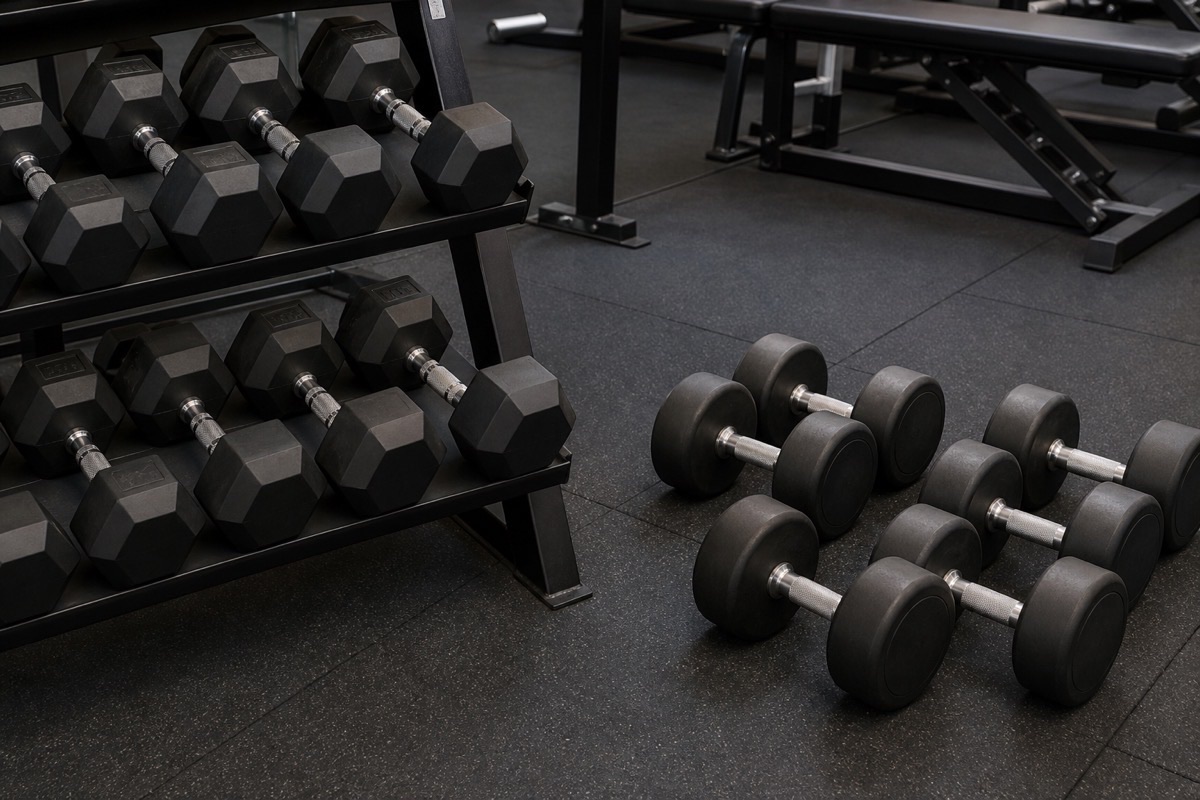
A hex dumbbell is a fixed-weight dumbbell whose heads have a hexagonal footprint so the bell sits flat and resists rolling; a round-head rubber dumbbell uses circular heads that can roll unless they are racked or parked with care.
Wholesale buyers treat this as a rack-density and floor-safety decision, not a paint choice. Yunlingyu’s RED-priority hex rubber dumbbells sit beside rubber round head dumbbells, vinyl coated hex dumbbells, and stainless steel dumbbells. This page compares hex vs round for commercial and retail POs.
Why the head shape shows up in RFQs
Round heads roll off open floors and crowded platforms. Hex heads take more width on some dumbbell racks if the cradle is built for round profiles. A “fitness gear cast hex dumbbell” style (cast hex core with rubber or urethane jacket) is the usual commercial compromise: stays put between sets, packs in pairs, and fills a 10-pair metal rack without constant chasing.
If you already specified hex rubber for MOQ and packing, keep this article for the shape decision and use Wholesale Hex Rubber Dumbbells for handle diameter, weight steps, and carton checks.
Comparison table buyers can quote
| Factor | Hex rubber / cast hex | Round rubber head |
|---|---|---|
| Rolling | Low on flat floors | High unless racked |
| Rack fit | Needs hex-friendly saddles; dense commercial racks often designed for hex | Fits many round cradles; may waste space on hex racks |
| Floor scuff | Rubber or vinyl jacket still marks if dragged | Same coating risk; plus roll damage |
| Packing | Pairs nest more predictably in cartons | Often needs extra blocking so heads do not shift |
| Typical wholesale use | Commercial gyms, schools, hotel gyms | Boutiques, some home lines, specialty looks |
| Not ideal when | The rack is round-only and will not be replaced | Open-floor circuits with no racks |
Handle diameter, knurling or smooth chrome, and rubber thickness are separate RFQ lines. Shape does not fix a thin jacket or a loose head-to-handle joint. Ask for a photo of the joint and a stated weight tolerance for both families if you split the PO.
Commercial buyers often describe a “fitness gear cast hex dumbbell” when they mean a cast-iron hex core with a rubber or urethane jacket and a steel handle. That is the volume wholesale shape for hotel gyms, schools, and big-box commercial floors because staff can park the bell between sets without chasing it. Round rubber heads are not “worse rubber”; they are a different geometry. Some boutique rooms prefer the round look on open shelves. The RFQ should still name jacket material, core type, handle diameter, and pair steps (for example 2.5 kg or 5 lb jumps) for each shape.
Vinyl hex, such as 1–10 kg vinyl hex dumbbells, is usually a light-weight and color story, not a substitute for 20–50 kg rubber hex on a commercial rack. Stainless fixed bells are a show-floor family: they do not roll like round rubber, but they scuff floors differently and need rack saddles that will not chip the steel. Keep stainless, vinyl hex, rubber hex, and round rubber as four lines if you truly need all four. Most first containers should pick one working profile (usually hex rubber) plus an optional light vinyl hex set for the stretching room.
Packing differences show up when heads can roll in the carton. Hex pairs can be wrapped and stacked with less void fill; round heads need blocking or they will grind jackets in transit. Ask for carton size and gross kg per weight for both, even if unit price looks similar. A 10-pair order of mixed 10–30 kg hex is a different cube than the same weights in round heads. If you buy the matching metal rack in the same PO, pack rack hardware in a labeled carton so installers do not open dumbbell boxes looking for bolts.
How to choose for one container
- Photograph the dumbbell rack saddles you already own, or confirm you will buy a matching 10-pair metal dumbbell rack.
- Pick hex as default for commercial open floors.
- Add round heads only if the brand look requires them and racks match.
- Do not mix hex and round in one unlabeled weight ladder—staff will mis-rack them.
- State kg vs lb and pair counts per weight for each shape.
Vinyl hex and rubber hex are both hex families with different jackets. Stainless or chrome fixed bells are another family for show floors. Keep those as extra lines, not synonyms for “round vs hex.”
FAQ
Are hex dumbbells always better for wholesale?
They are the safer default for commercial floors without constant supervision. Round can still be correct for a rack system built for round heads. If you are opening a new gym and buying racks at the same time, specify hex saddles and hex bells together so you do not inherit a round-only rack.
Can round and hex share one rack?
Only if the saddle geometry holds both. Most buyers pick one profile per rack to avoid rocking and wasted slots. A mixed rack also slows members who grab the wrong neighbor bell. If you must mix, put round on a separate short rack for the boutique room.
Does hex packing cost less?
Often carton cube is similar by weight; hex is easier to stop from rolling in the box. Ask for carton size per weight either way. Round heads that are not blocked will grind jackets and create coating claims that look like “cheap rubber” when the issue was packing.
Is a cast hex core required?
Cast or steel cores are common under rubber. Confirm core type and jacket on the quote. “Hex” describes the head shape, not automatically the alloy. A cement-filled hex is a different product family and should not be sold as a commercial cast hex dumbbell.
RFQ example: 10 pairs from 5 kg to 30 kg hex rubber for a hotel gym, plus 1–10 kg vinyl hex for the stretching room, no round heads. Attach a photo of the planned 10-pair metal rack. Ask for handle diameter, jacket thickness, weight tolerance, and carton kg per weight. That is a complete hex wholesale order. Adding round heads later is a second rack decision, not a color swap on the same PO line. If the hotel already installed round saddles, photograph them before you order hex, or budget a rack swap in the same container.
Conclusion
For wholesale, hex dumbbells reduce rolling and usually pack and rack more cleanly; round rubber heads need matching cradles and more floor discipline. Send rack photos plus pair counts to Yunlingyu so the quote matches the saddles you actually have.
Choosing hex vs round for a wholesale dumbbell PO?
Send rack photos and pair counts. Yunlingyu will quote hex rubber, vinyl hex, round-head, or stainless lines against the saddles you actually use.
About the Author
This guide is brought to you by Yunlingyu (Dingzhou Yunlingyu Sports Goods Co., Ltd.), a fitness equipment manufacturer specializing in dumbbells, weight plates, barbells, squat racks, Smith machines, benches, kettlebells, and related gym products for wholesale, OEM, and private-label buyers worldwide.

