
What You Will Learn
- Why rubber and vinyl coats chip after a quiet ocean leg
- What incoming photos must show for an adhesion versus abrasion claim
- How bumper plate weight plates differ from vinyl hex in failure mode
- What to write on the PI so “chip” is inspectable
Table of Contents
What a post-shipping chip usually is
A coating chip after shipping is either the coat leaving the core (adhesion) or the coat being scraped by a neighbor or carton (abrasion). Buyers mix the two and then argue with the factory. Incoming photos exist to split them before anyone quotes a repair.
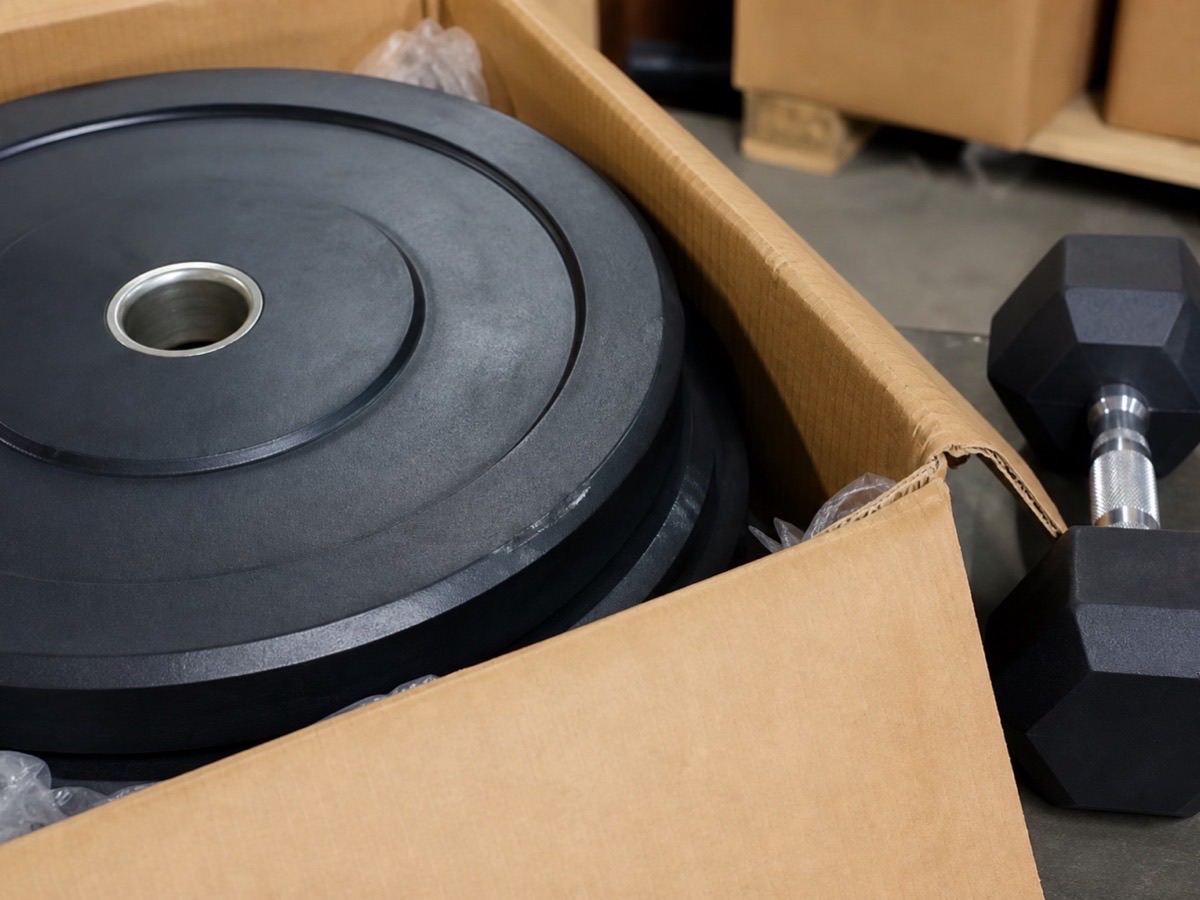
On vinyl hex such as color hex vinyl dumbbells, chips often start at hex corners and handle entries. Bumper plate weight plates chip at the rim and at the insert. Bumper plates weight in a mixed stack also scuff printed logos. Write the coat type on the PI: vinyl, rubber coat, or bumper rubber.
Adhesion fail versus transit abrasion
Adhesion fails look like the coat lifting in a sheet, often with a clean edge and exposed primer or iron, sometimes on faces that did not rub. Abrasion looks like a scrape path, carton brown transfer, or a matching scar on the neighbor. If you only photograph the pretty side of one bell, you cannot tell which story it is.
Cold containers make some coats brittle. That is a condition, not a certificate. If your market needs a named adhesion test, attach the method. Do not invent a peel number.
Photo set that separates the two
| Photo | What it shows | Skip this and you lose |
|---|---|---|
| Container door | Stuffing and wet floor | Origin versus ocean argument |
| Closed carton | Crush, puncture, marks | Whether the box failed first |
| Open carton as-found | How pieces sat | Neighbor rub versus lone chip |
| Chip close-up plus opposite face | Sheet lift versus scrape path | Adhesion versus abrasion |
| Neighbor contact point | Matching scar | Proof of rub |
Keep pieces in the carton until the as-found set is done. Racking for a “nice” photo destroys the evidence.
Incoming steps
- Photograph door and carton marks before you cut tape if the carton is the claim unit.
- Open, photograph nest, then lift one piece. Do not wipe the chip.
- Compare to the approved sample photos taken at origin. A sample that already chipped at corners is a process issue, not “the ship.”
- Record coat type and SKU. Vinyl hex and bumper rims are different materials.
- If the PI has an adhesion method, run that method on a spare sample, not on the only showroom pair.
Worked split: vinyl hex corners show brown carton fibers in the scar. That is abrasion. A bumper face shows a rounded lift with clean iron and no carton dust, including on the top of the stack where nothing rubbed. That is adhesion. Keep both examples in the claim folder so purchasing does not treat every chip as packing.
Bumper plate weight plates with printed logos need a logo photo in the origin sample set. If the bulk logo is a sticker and the sample was printed in the rubber, that is a construction change. Bumper plates weight in mixed colors should be checked per color; one color batch can chip while another does not.
What photos cannot prove
Photos do not measure peel strength. They do not prove a drop test. They do not replace a written coat spec. They do decide whether you are looking at packing rub or a coat that never stuck. Factory odor and head-to-handle looseness are other claim types; do not dump them into a chip folder.
FAQ
Small chips on hex corners only.
Often abrasion or a thin corner coat. Check the neighbor and the carton wall. If every corner on unused faces lifts, think adhesion.
The sample was perfect and bulk is chipped.
Hold the lot. Compare origin sample photos to bulk. Ask whether the coat batch or inner pack changed.
Can we accept touch-up paint?
Only if the PI allows it and the gym will accept the look. Commercial gyms often reject face touch-up. Write the rule before production.
Do bumpers need the same photo set?
Yes, with extra rim and insert shots. Logo scuffs on bumpers are still abrasion unless the logo film lifts as a sheet.
Conclusion
Split adhesion from abrasion with an as-found photo set, then compare to the origin sample. Send coat type and SKU list through the quote page.
Need a coat and photo note on your PI?
Send coat type (vinyl, rubber coat, bumper) and SKU list. Yunlingyu will confirm origin sample photos and incoming evidence.
About the Author
This guide is brought to you by Yunlingyu (Dingzhou Yunlingyu Sports Goods Co., Ltd.), a fitness equipment manufacturer specializing in dumbbells, weight plates, barbells, squat racks, Smith machines, benches, kettlebells, and related gym products for wholesale, OEM, and private-label buyers worldwide.

