
What You Will Learn
- How to specify diameter, collar, and thickness for export bumper plates
- What a checkable drop-test note includes (and what it does not)
- Carton marks, packing lists, and loading fields factories need
- When bumpers are the wrong line versus coated or cast iron
Table of Contents
The export problem with bumper plates
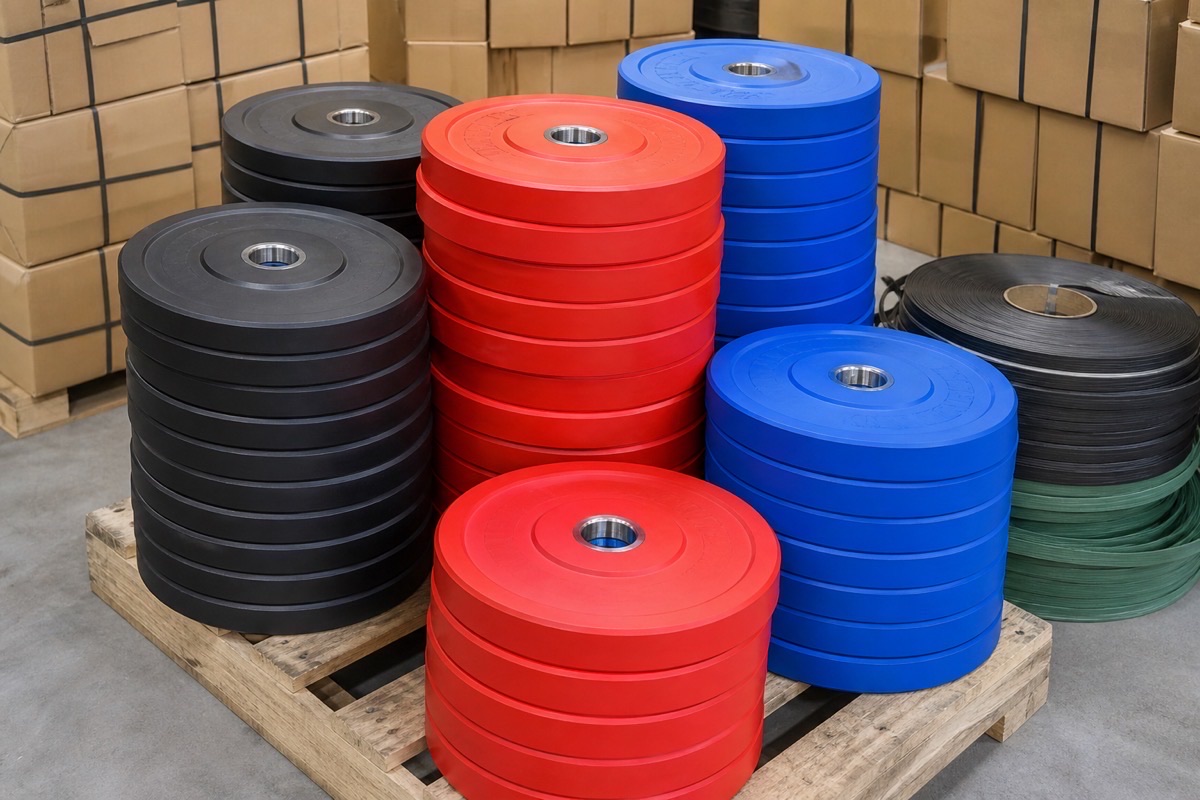
Barbell bumper plates are rubber-bodied Olympic plates built so the disc, not the floor, takes the hit when a loaded bar is dropped. Wholesale trouble starts when a buyer orders “bumpers” from a photo and receives a different outer diameter, a loose steel insert, or cartons with no usable marks for customs and warehouse receiving.
Export orders add three constraints that domestic gym fit-outs often skip: carton marks must match the packing list, gross weight per carton drives LCL and FCL quotes, and drop claims need a stated height and surface—not a slogan. Yunlingyu manufactures color rubber bumper plates and related plate SKUs in Dingzhou for wholesale and OEM programs. This guide is the spec sheet you should attach to an RFQ before you book a container.
Diameter, collar, and thickness you should lock
Most commercial Olympic bumpers are specified near 450 mm outer diameter so a mixed stack still meets the bar at a predictable height. Confirm the figure in millimeters on the quotation, not only in a lifestyle photo. Collar / center-hole size for Olympic bars is typically about 50.4 mm (2 inch). If your program also uses standard 1-inch bars, those plates are a different RFQ line—see the Olympic vs standard importer guide when you publish companion SKUs.
Thickness changes with weight. A 5 kg bumper is much thicker than a 25 kg bumper of the same diameter. That matters for how many plates fit on a steel power bar sleeve and how you pack pairs in a carton. Ask for a thickness table by weight, plus insert type (steel ring vs other). Color coding helps gyms and retailers sort inventory; it also raises MOQ if every weight needs a unique colorway.
| Spec field | Typical Olympic bumper | Why exporters ask |
|---|---|---|
| Outer diameter | About 450 mm (confirm on quote) | Stack height and competition-style look |
| Center hole | About 50.4 mm / 2 inch | Fit on Olympic sleeves, not 1-inch bars |
| Insert | Steel ring, bonded to rubber | Spin on the bar; crack risk if poorly bonded |
| Weight marks | kg, lb, or dual | Market labeling and carton marks must match |
| Weight tolerance | Ask in writing (for example factory ±%) | Gyms notice pairs that do not match |
For color-coded gym floors, review color bumper plates as a separate line from black training bumpers. Do not assume one mold covers every color and every logo method.
Weight accuracy should be written as a plus/minus percent or as grams per disc, and it should apply to the pair you will sell as a set. Gyms notice a 20 kg plate that does not match its partner on a deadlift. If you need calibrated-style plates, say so; training bumpers and calibrated competition discs are different RFQ families. Insert bonding is a second accuracy issue: a steel ring that spins independently of the rubber after a few drops is a warranty problem, not a color problem. Ask for a close photo of the insert after the sample drop video, including the back of the plate.
Drop-test language that is actually checkable
A useful drop note states height, surface, plate weight, and whether the bar is dropped from the hang or from overhead. “Commercial drop tested” with no method is not a spec. Ask the factory for a short video of the insert after repeated drops on the sample weight you care about—often 15 kg or 20 kg pairs, not only a 5 kg change plate.
Bumper rubber is not a license to dump plates on concrete without a plan. Thin budget bumpers can crack at the insert. Virgin vs recycled rubber blends change bounce, odor, and cost. Put the rubber grade you want in the RFQ if indoor air and bounce matter; if you only need floor protection for controlled gym drops, say that too so production does not over-spec the compound.
This article does not replace a lab certificate. If your buyer contract requires a named test standard, send that document with the RFQ rather than asking the factory to guess.
Carton marks, packing list, and loading
Carton marks are the stencil or printed block on the outer box: product name, weight, quantity, net/gross kg, carton size, and destination marks if your forwarder requires them. Neutral factory marks vs your brand marks is an OEM decision—same as logo plates such as custom logo color barbell bumper plates.
Request a draft packing list before you pay the deposit on a full container: pieces per carton, cartons per pallet, pallet type, and whether plates ship vertical or flat. Weight bumper plates in mixed ladders (5 through 25 kg) rarely pack at one kg-per-carton figure. Freight quotes fail when the factory later says “about 20 kg per box” and the 25 kg pairs arrive at a different cube.
- Lock SKU list: weight × color × quantity (pairs).
- Lock hole size, diameter, and kg vs lb marks.
- Ask for carton L×W×H and gross weight per SKU.
- Decide palletized vs carton-only and any retailer label rules.
- Align carton marks with the commercial invoice product names.
Mixed ladders (5 kg through 25 kg) should not share one “average carton weight” on the freight email. The 5 kg bumpers are thick and cube-heavy; the 25 kg bumpers are dense. Your forwarder prices both. If you also ship hi-temp rubber bumper plates or black coated Olympic plates in the same container, give each construction its own packing-list block so receiving does not open a bumper carton expecting iron.
Carton marks that only say “weight plates” create customs delays when the invoice says “rubber bumper plates, 20 kg, red.” Use the same English product name on the quote, the packing list, and the box. Private-label marks can hide the factory name if that is your program—but they still need weight, quantity, and country-of-origin fields your broker asked for. Confirm those fields before the first stuffing photo, not after the container is sealed.
When bumper plates are the wrong line
Do not specify full bumpers when the gym never drops the bar and needs dense iron on machines—that is a coated or cast-iron RFQ. Do not mix Olympic bumpers onto 1-inch home bars. Do not treat a home-gym “barbell bumper plate set” photo as a commercial 450 mm spec. If you need both drop plates and change plates, split the PO so packing and MOQ stay honest.
FAQ
What carton data should I request with the first quote?
Carton size, gross weight, pieces per carton, and a sample carton-mark layout. Without those four, ocean freight is a guess.
Do I need a drop-test certificate?
Only if your contract names one. Otherwise ask for a method (height, surface, weight) plus a sample video of the insert after drops.
Can every weight share one color to cut MOQ?
Often yes. Rainbow colorways look good in retail photos and raise color-change and inventory cost. Confirm MOQ per color and per weight, not only total tons.
Should logo plates use the same packing as blank plates?
Usually yes on carton strength; marks and inner protection may differ. Call out logo SKUs on the packing list so receiving does not mix branded and blank stock.
Conclusion
Export-ready barbell bumper plates are defined by diameter, 50 mm-class collar, thickness by weight, checkable drop notes, and carton marks that match the packing list. Send those fields with quantity and destination. Yunlingyu can quote rubber bumper plates and companion bars from the same factory program—use the contact page with your weight ladder attached.
Need export bumper plates quoted from a real spec?
Send your weight ladder, hole size, color plan, and destination. Yunlingyu will reply with construction and packing notes you can use on the PO.
About the Author
This guide is brought to you by Yunlingyu (Dingzhou Yunlingyu Sports Goods Co., Ltd.), a fitness equipment manufacturer specializing in dumbbells, weight plates, barbells, squat racks, Smith machines, benches, kettlebells, and related gym products for wholesale, OEM, and private-label buyers worldwide.

