
What You Will Learn
- Why a foldable gym mat quote fails when the buyer asks only for unit price.
- Which five quote fields decide whether foam, packing, and container cost will stay under control.
- How to compare a clean sample against the real packed-state shipment condition.
- What to send a factory so the first quote is closer to the real order and not just a catalog number.
Table of Contents
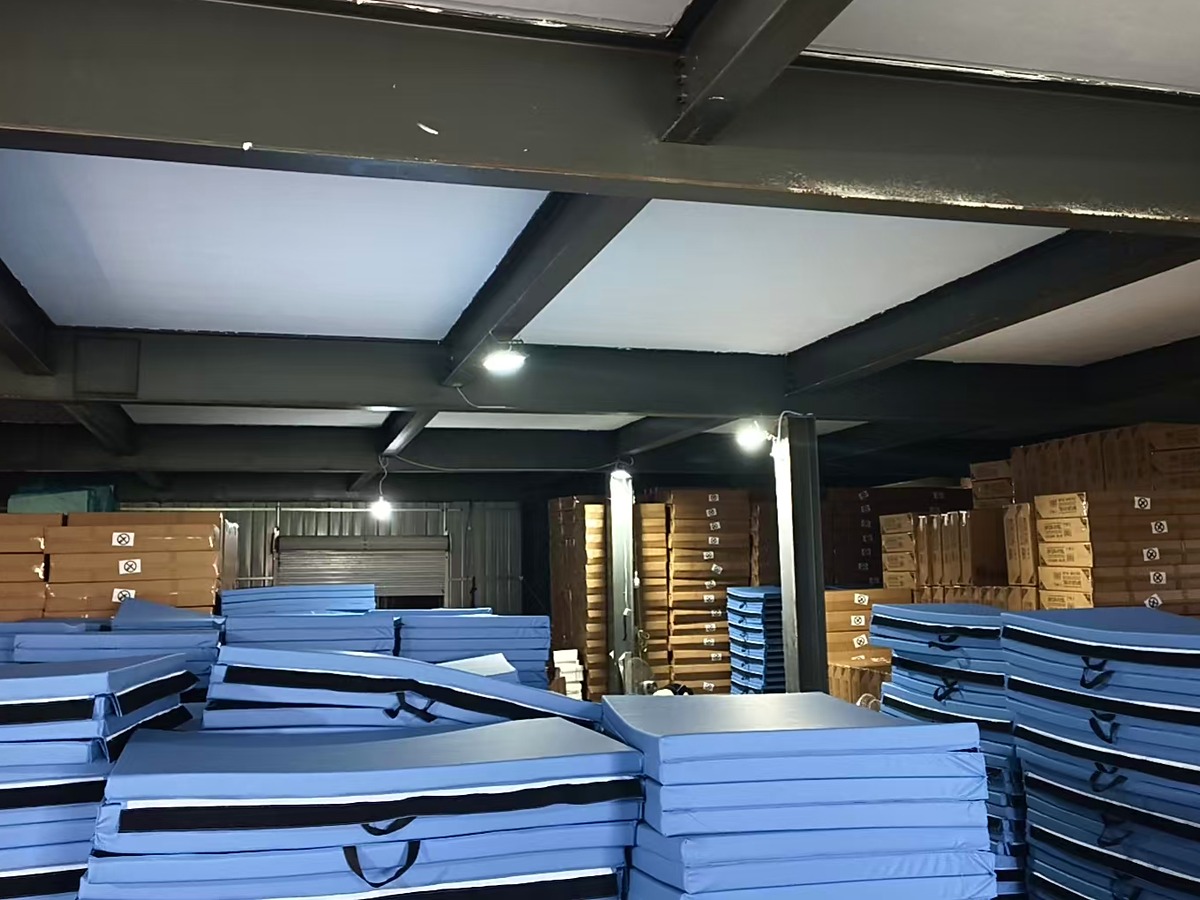
Quick answer: A foldable gym mat quote is only comparable when the buyer and factory are talking about the same packed-state product: same use case, same folded form, same handle and zipper standard, same bundle logic, and the same shipment path. If those points stay vague, the cheapest unit price often loses margin later through freight drift, rework, or complaint handling.
What a Foldable Gym Mat Quote Should Really Cover
Buyers often ask for foldable gym mats the same way they ask for a simple accessory: send a size, a color, and a quantity, then compare the unit price. That is where the problem starts. A mat quote is not only about the visible product. It is also about the packed-state form that will go into stock, outer cartons, bundles, pallets, and eventually the container.
Yunlingyu’s current foldable gym mat product page already frames the item for gyms, schools, distributors, and brands, with custom logo, size, and export-packing support. That is useful as a starting point. But buyers still need to decide what exact version is being priced for their channel, because a school order, a distributor order, and a mixed-container project order do not carry the same freight and complaint risk.
Why Cheap Quotes Lose Margin Later
In real factory conversations, mat problems rarely start with “your price was too high.” They start later: the bundle took more cube than expected, the sample was approved open but the shipment arrived tightly compressed, the mats shared a container with heavier goods, or the buyer approved logo details while leaving the packed-state standard vague. By the time the issue becomes visible, the unit price discussion is over and the real cost has moved into freight, rework, and claims.
That is the content gap on Yunlingyu’s current mat cluster. The published bulk-order checklist already helps buyers review construction and general order prep. What it does not yet isolate is the quote stage itself: how to compare two prices when foam, cover, packed-state handling, and container planning may not be equivalent.
The 5 Quote Checks Before You Pay a Deposit
1. Match the quote to the real use case
A school PE program, a gymnastics distributor, and a general gym-accessories wholesaler can all say “foldable mat” while expecting different packed-state behavior. Write the end use into the RFQ first. If the use case stays broad, the quote will also stay broad, and cheap numbers become hard to compare in a fair way.
2. Compare the structural assumptions, not only the unit price
Ask which folded version is being quoted: fold count, surface finish, handle and zipper layout, packed condition, and whether the quote assumes one standard stock model or an adjusted OEM version. A low number can be real, but only if the structure behind it is also the same.

3. Approve the packed-state sample, not only the clean sample
This is where margin often leaks. The open sample may look fine, but the delivered condition can still create complaints if the buyer never asked to review the folded, wrapped, or boxed state. If your market is sensitive to first-opening appearance or storage convenience, the quote should be checked against the packed version early.
4. Ask how the mats will use container space
Foldable mats do not behave like iron goods. They change cube, bundle count, and loading flexibility differently. If mats ship with benches, dumbbells, or other heavier goods, the quote should reflect that reality. Yunlingyu’s existing export-packing article is helpful here because the packing plan belongs in the RFQ, not after the factory has already quoted on a simplified assumption.

5. Keep OEM decoration separate from quote-risk control
Logo, color, and carton marks matter. But they should not hide structural uncertainty. If the buyer spends most of the quote conversation on branding while skipping packed-state approval, container use, or mixed-cargo pressure, the order becomes easy to decorate and hard to deliver cleanly.
What Each Quote Line Does and Does Not Tell You
| Quote Signal | What It May Mean | What Buyers Still Need to Verify |
|---|---|---|
| Low unit price only | The supplier is competing on the number you asked for | Ask what packed state, cover, foam, bundle count, and outer-box logic that number actually includes. |
| Sample looks clean | The showroom piece may be acceptable | Verify whether the shipped condition will be folded, compressed, wrapped, boxed, or mixed with heavier cargo. |
| Freight seems manageable | The buyer has a rough cube assumption | Check folded dimensions, bundle quantity, carton plan, and whether mats share the container with dumbbells, benches, or racks. |
| Logo and color are approved | The decoration layer may be settled | Do not let OEM discussion hide zipper, handle, fold alignment, or packed-state approval gaps. |
| Factory says export packing included | Basic packing support exists | Ask for the exact package form, load order, and how the mats are protected from crush pressure and edge damage. |
How Yunlingyu Sports Can Support the Inquiry
The practical path is simple. Send the expected end use, whether the mats ship alone or with other SKUs, what packed-state photos or videos you need before balance payment, and whether the first order is a standard version or an OEM version. That gives the factory enough information to quote the real job instead of a generic catalog line.
If your team is still comparing supplier reliability more broadly, Yunlingyu’s existing supplier-question article and deposit checklist are the next useful steps. If the project is mixed-SKU, the product-line overview helps the buyer think beyond one mat item and into the full shipment plan.
FAQ
What should buyers compare first on a foldable gym mat quote?
Compare the real use case, folded form, cover and foam description, bundle size, and shipment condition first. If those items stay vague, the lowest unit price can still become the most expensive order after freight and claims.
Why does a cheap foldable gym mat quote become expensive later?
The gap usually appears after packing. Buyers approve a clean sample, but the real cost shows up in compressed bundles, carton limits, mixed-cargo loading, rework, or complaints when the delivered condition does not match the quoted assumption.
Should buyers judge foldable mats by thickness only?
No. Thickness matters, but quote safety also depends on cover finish, fold structure, handle and zipper details, packed-state condition, bundle logic, and how the mats will share space with other cargo.
What should a factory ask before quoting foldable gym mats?
A useful RFQ should include end use, target market, folded or unfolded expectations, logo request, packed-state requirement, shipping path, whether the mats will ship alone or with other gym goods, and what approval photos the buyer expects before balance payment.
Conclusion
The best foldable gym mat quote is not the cheapest line in a spreadsheet. It is the one that still makes sense after the buyer checks the real packed-state product, the container plan, and the actual complaint risk. When those details are clear before the deposit, price comparison becomes cleaner and margin stays more predictable.
Send us your size list, target market, bundle expectation, and whether the mats will ship with other gym goods. We can quote against the actual packed-state requirement instead of a generic catalog assumption. Contact Yunlingyu Sports here.
About the Author
This draft is written in Yunlingyu Sports’ factory-owner voice for B2B buyers who need clearer quote logic before a bulk mat order. The focus is practical approval steps, not generic catalog copy.

